Tirzepatide Dosage Calculator
Convert your weekly tirzepatide dose into the exact units to draw. Enter your vial size and how much bacteriostatic water you used, and see the concentration, draw volume and unit mark instantly. Prefilled for a common 30mg vial.
Last updated November 7, 2026
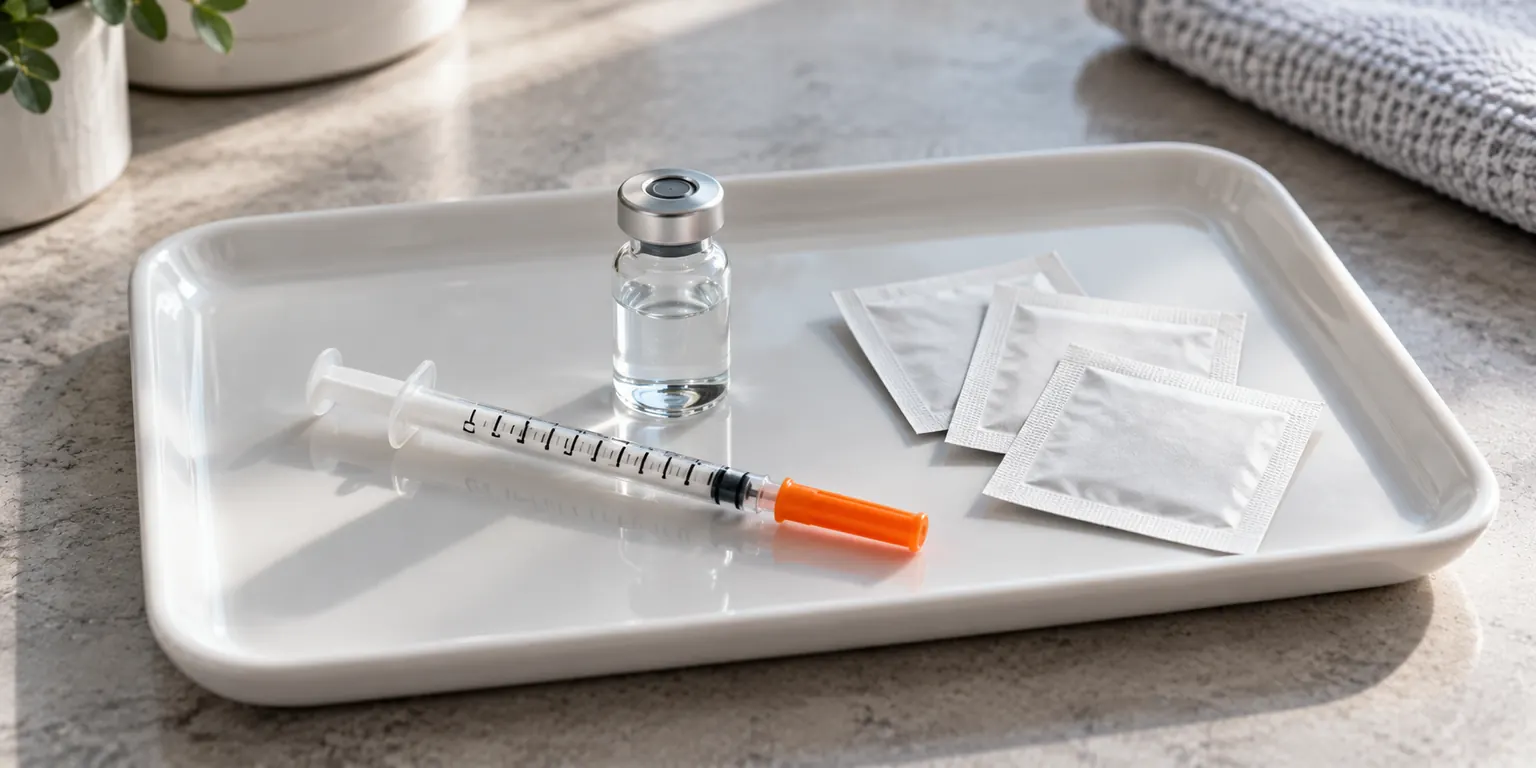
Calculate your exact tirzepatide dose
Enter your tirzepatide vial size, how much bacteriostatic water you used, and your weekly dose. The calculator shows exactly how many units to draw on a 100-unit syringe. It is prefilled for a 30mg vial mixed with 2ml of water at the 2.5mg starting dose.
Recommended needle setup
Standard tirzepatide titration
Tirzepatide is injected once weekly and stepped up every 4 weeks. The schedule below mirrors the Mounjaro and Zepbound labels. Compounded and research tirzepatide has no separate approved dose, so people generally follow the same steps. Set your actual plan with a prescriber.
| Phase | Weekly dose | Weeks at this dose | Units (30mg vial + 2ml) |
|---|---|---|---|
| Start | 2.5 mg | Weeks 1-4 | 17 units |
| Step 2 | 5 mg | Weeks 5-8 | 33 units |
| Step 3 | 7.5 mg | Weeks 9-12 | 50 units |
| Step 4 | 10 mg | Weeks 13-16 | 67 units |
| Max | 15 mg | Week 17 and on | 100 units |
Tirzepatide doses are large, so a concentrated mix keeps a full weekly dose on one syringe. A 30mg vial with 2ml of bacteriostatic water gives 15,000 mcg/ml, so the whole 2.5mg to 15mg range fits on a single 100-unit syringe. With a smaller 10mg vial you would use less water or split the dose. For background, see tirzepatide and tirzepatide human studies.
Disclaimer: Educational tool, not medical advice. Tirzepatide is a prescription medicine; compounded and research versions are not FDA-approved. Doses should come from a prescriber. Injecting anything carries real risks, including infection.
How the peptide dosage calculation works
The calculator does three steps. You can check any result by hand:
Concentration
Volume
Units
Worked example: a 5mg vial mixed with 2mL of bacteriostatic water is 2,500mcg per mL. A 250mcg dose is 250 ÷ 2,500 = 0.1mL, which is 10 units.
| 5mg vial + water | Concentration | 250mcg dose | 500mcg dose |
|---|---|---|---|
| 1mL | 5,000mcg/mL | 5 units | 10 units |
| 2mL | 2,500mcg/mL | 10 units | 20 units |
| 2.5mL | 2,000mcg/mL | 12.5 units | 25 units |
| 5mL | 1,000mcg/mL | 25 units | 50 units |
This calculator does the math only. It does not tell you what dose is appropriate. For how tirzepatide is dosed, see the tirzepatide guide and the peptide dosing guide. Before you buy or inject, read how to read a COA and peptide side effects.
Disclaimer: Educational tool, not medical advice. Most peptides are research chemicals with no FDA-approved human dose. Injecting anything carries real risks, including infection. Talk to a licensed clinician before starting any compound.
How to mix your tirzepatide vial
Follow these steps every time you reconstitute. Proper mixing technique protects the peptide from degradation.
- 1
Start with a freeze-dried vial
Lyophilized peptides come as a white powder. Store unreconstituted vials in the freezer. Never shake the vial.
- 2
Draw bacteriostatic water
Use bacteriostatic water only, never regular saline or tap water. Draw slowly from the BAC water vial with a clean syringe.
- 3
Inject water slowly down the side
Aim the stream down the inside wall of the vial. Never inject directly onto the powder. Let it dissolve on its own, do not shake.
- 4
Swirl gently until clear
Gently rotate the vial between your fingers until fully dissolved. The solution should be clear and colorless. If cloudy, discard.
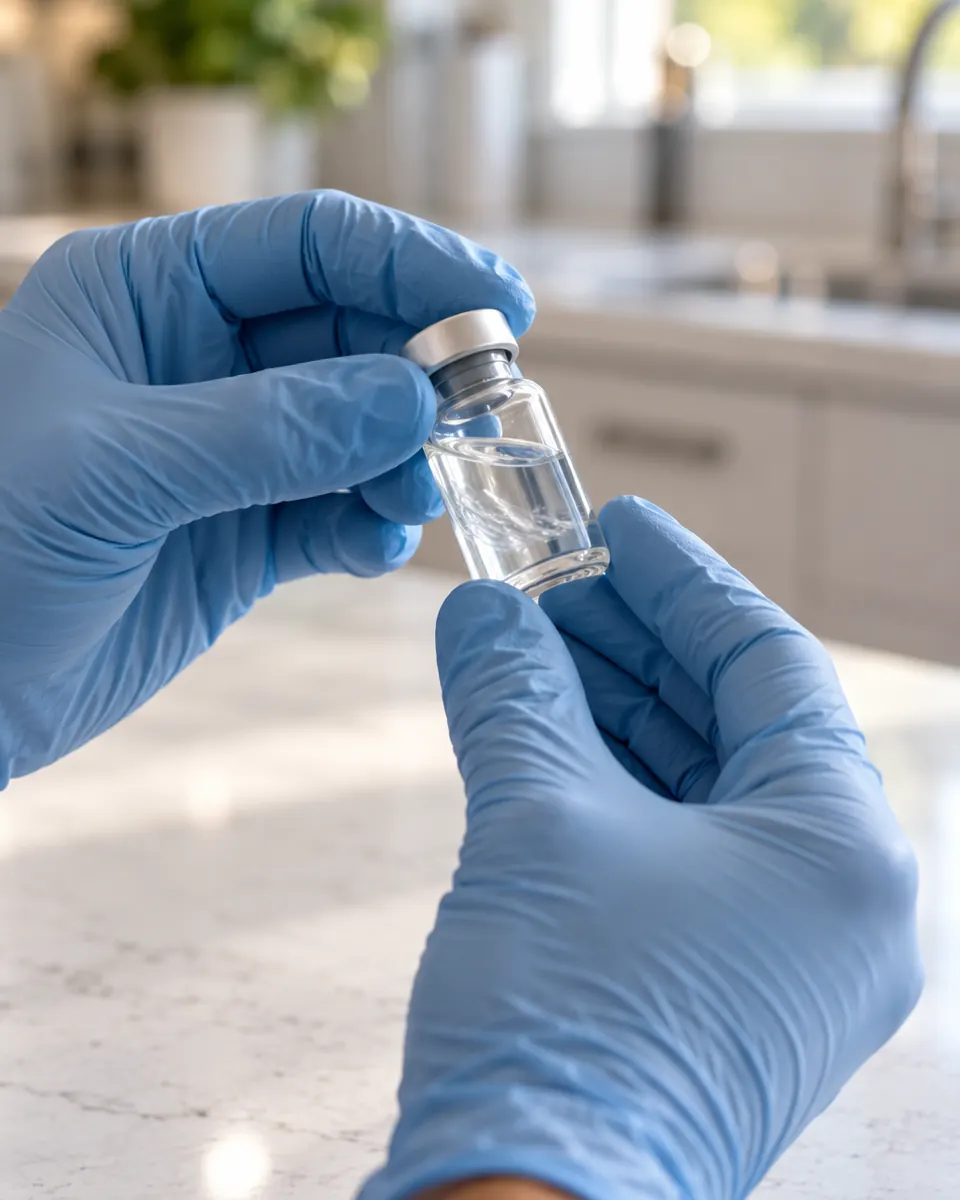
How to do a subcutaneous injection
Four steps to a clean, accurate and comfortable injection every time.
Wash hands and prep
Wash hands thoroughly with soap for 20 seconds. Clean the injection site and vial top with separate alcohol swabs. Let both dry completely before proceeding.
Draw your dose
Insert the 31G needle through the center of the vial stopper at a slight angle. Draw back slowly to your calculated unit number. Hold syringe needle-up and flick to move bubbles to the top. Push slightly to expel air.
Pinch and inject at 45 to 90 degrees
Pinch 1-2 inches of skin firmly. Insert the 5/16 inch needle in one smooth motion, at 90 degrees if you can pinch a good fold of fat or 45 degrees if you are lean. Release the pinch. Depress the plunger slowly over 5-10 seconds.
Withdraw and apply pressure
Withdraw the needle at the same angle it entered. Press a clean alcohol swab gently on the site for 10 seconds. Do not rub. Dispose of the needle in a sharps container immediately.
Best sites for subcutaneous injections
Rotating sites prevents lipodystrophy and improves absorption.
Abdomen
2 inches from your navel on either side. The most common and accessible site. Easy to pinch. Rotate left and right sides with each dose.
Outer Thigh
The middle outer portion of your upper thigh. Easy to reach without assistance. A good alternative when abdomen sites need rest.
Upper Arm / Tricep
The back of your upper arm. Requires more flexibility to reach solo. Effective as a third rotation point for multiple daily doses.
Site rotation rule: Never inject the same spot twice in a row. A good 4-point rotation: left abdomen, right abdomen, left thigh, right thigh. Log each injection site in your BioStackIQ progress check-in.
Dos and don'ts for peptide injections
Small technique differences have a large impact on safety, absorption, and comfort.
- Use a new needle for every injection
- Store reconstituted peptides in the refrigerator
- Use bacteriostatic water for multi-use vials
- Let the alcohol dry before injecting
- Inject slowly over 5-10 seconds
- Rotate injection sites every dose
- Keep a log of injection sites and doses
- Use 31G or finer needles for SubQ
- Do not shake the vial when reconstituting
- Do not inject into muscle with a SubQ needle
- Do not reuse needles, ever
- Do not inject into red, swollen, or bruised skin
- Do not use regular saline for multi-use vials
- Do not store reconstituted peptides at room temperature
- Do not inject directly onto the powder when reconstituting
- Do not draw air bubbles into your injection
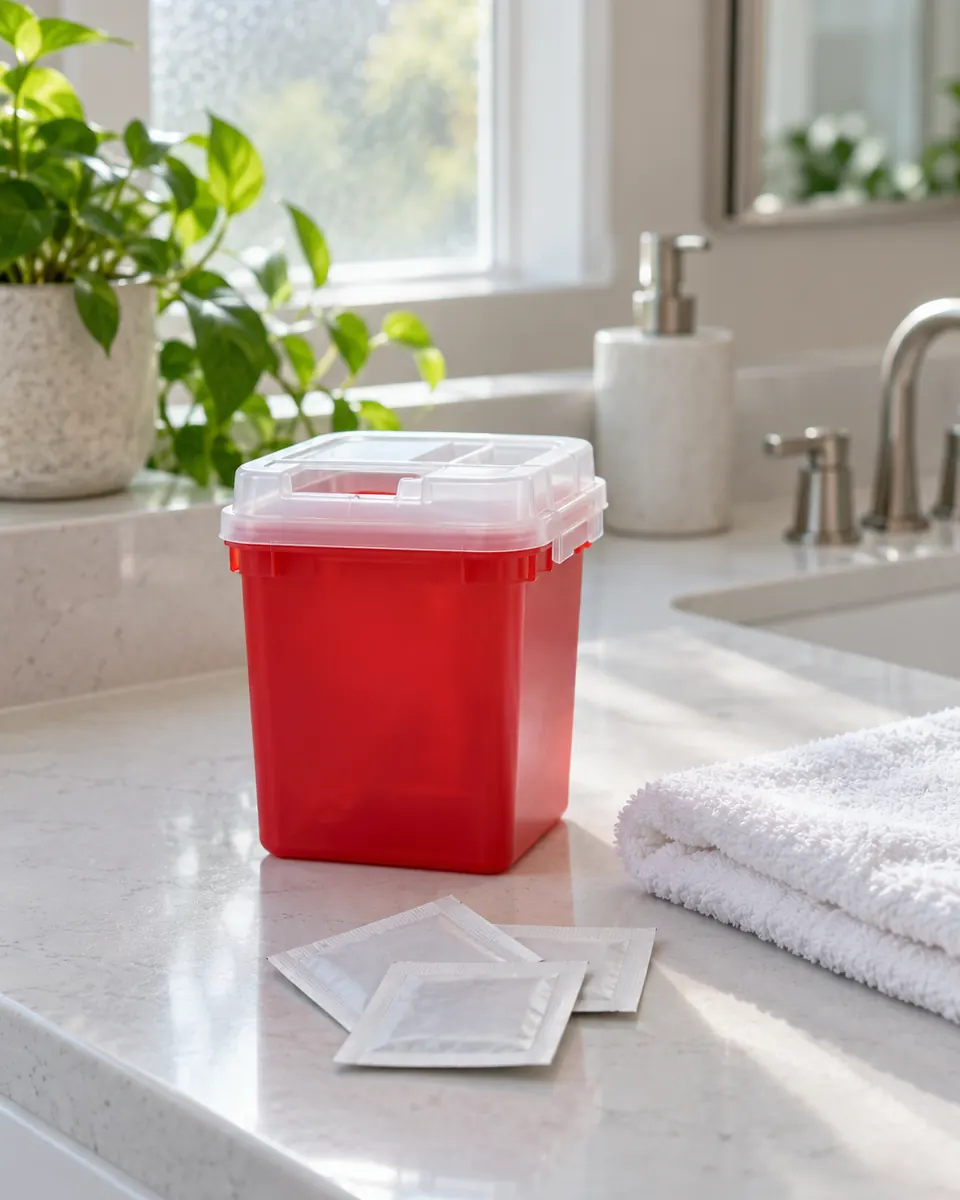
How to store your peptides
Proper storage is critical. Heat and light degrade peptides. Cold and dark preserves them.
Unreconstituted (powder)
Store in the freezer at -4F to -20F. Keep away from light. Can last 12-24 months frozen. Do not freeze-thaw repeatedly.
After reconstitution
Store in the refrigerator at 35-46F. Keep away from light. Use within 28 days. Never freeze a reconstituted vial.
During travel
Keep in an insulated cooler with an ice pack. Never leave in a hot car. If left at room temperature, use within 24-48 hours or discard.
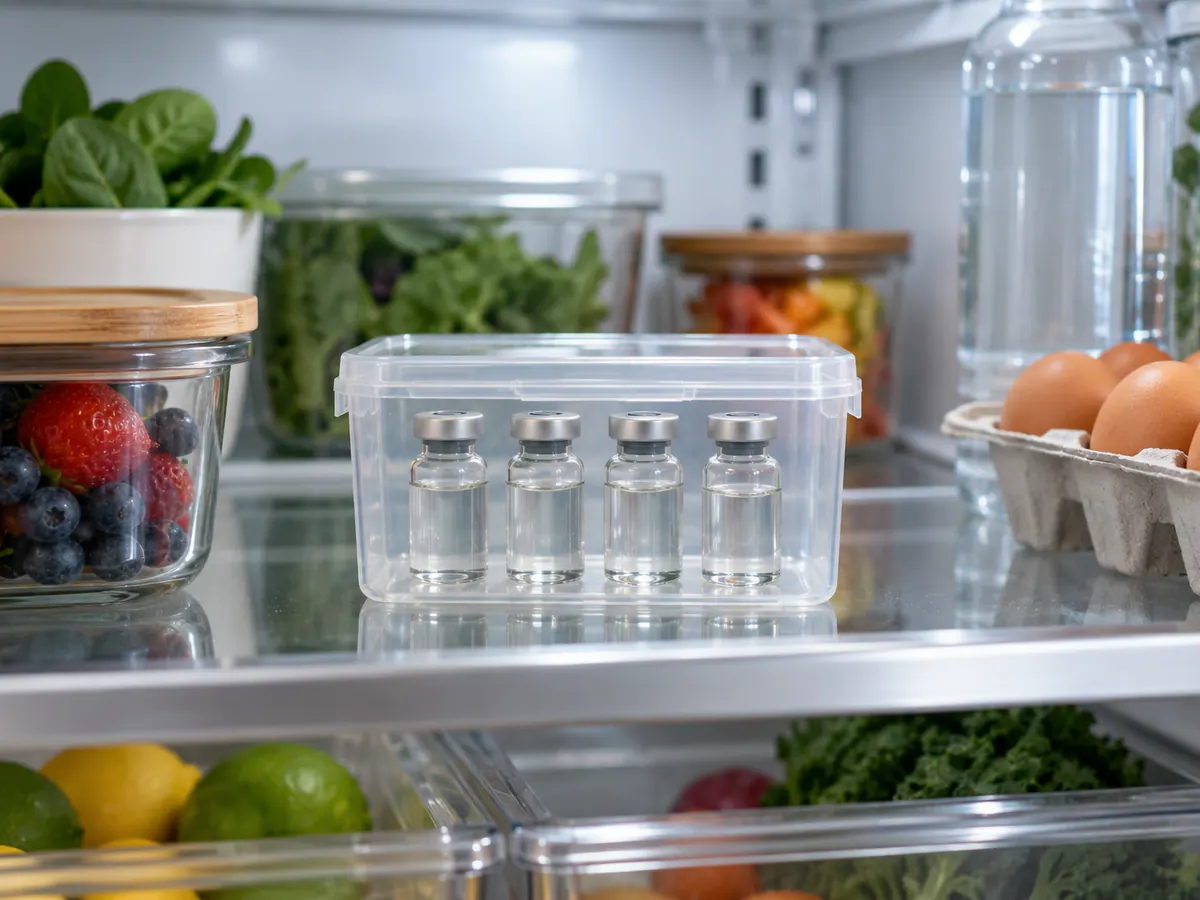
Tirzepatide dosing questions
The questions that come up most when starting a peptide protocol.
How many units is 2.5mg of tirzepatide?
It depends on your vial. For a 30mg tirzepatide vial mixed with 2ml of bacteriostatic water (15,000mcg per ml), 2.5mg is about 0.17ml, which is roughly 17 units on a 100-unit syringe. On that same mix, 5mg is 33 units and 10mg is 67 units.
How much bacteriostatic water should I use for tirzepatide?
Use enough to keep your largest planned dose within one 100-unit syringe. A 30mg vial with 2ml covers the full 2.5mg to 15mg range. A 10mg vial needs less water or a split dose at the higher steps. More water always means more units per dose.
How often is tirzepatide injected?
Once a week, subcutaneously, on the same day each week. The dose is stepped up every 4 weeks. The calculator above is for one weekly injection.
What is the tirzepatide titration schedule?
The approved labels start at 2.5mg weekly for 4 weeks, then 5mg, then increase by 2.5mg every 4 weeks as needed, up to a 15mg maximum. Your prescriber sets the actual steps.
Why are my tirzepatide units so high?
Tirzepatide doses are large in milligrams, so a dilute mix can push the draw past a full syringe. If the calculator shows more than 100 units, reconstitute with less water to make the solution more concentrated, or split the dose into two injections.
How long does reconstituted tirzepatide last?
Store it in the refrigerator at 35-46F, away from light, and use it within about 28 days. Keep unmixed powder frozen. Discard any cloudy solution or one with particles.
Can I use an insulin syringe for tirzepatide?
Yes. A 1ml, 100-unit insulin syringe with a 31 gauge, 5/16 inch needle is standard. Just make sure your mix is concentrated enough that your dose fits within the 100 unit mark.
Learn the technique visually
Step-by-step video walkthroughs covering every part of the injection and reconstitution process. Videos load from YouTube only when you click play.
Peptide Reconstitution Explained: Mixing, Dosing & Injecting Safely
Complete walkthrough covering reconstitution, dosing, and safe injection technique.
Video pageReconstituting your peptide vial
How to mix your vial correctly every time without degrading the peptide.
Video pageHow to Rotate Injection Sites
Proper site rotation strategy to avoid lipodystrophy long term.
Video pageReady to build your protocol?
BioStackIQ builds your personalized peptide protocol, checks every compound interaction, and guides you through every step.