How Much Do Peptides Cost?
Anywhere from about $25 a vial to $800 a month. The price depends on what you buy, who oversees it and what is included.
- Brand GLP-1 self-pay: $149 to $449/mo
- Clinic programs: $250 to $800/mo
- Research vials: $25 to $90 each
Educational content only, not medical or financial advice. Doses named on this page are product strengths, not recommendations. Prices change often; confirm with the seller before you buy.
The short answer
Most people spend between $100 and $800 a month on peptides or peptide therapy. FDA-approved peptide drugs bought through manufacturer self-pay programs cost about $149 to $449 a month as of October 2026. Supervised clinic or telehealth peptide programs often cost $250 to $800 a month. Research peptides bought online are the cheapest, often $25 to $90 a vial, but they come with no medical oversight and the widest swings in quality.
The real question is what the price includes. A higher price usually buys you a prescription, a licensed pharmacy, a clinician and bloodwork. A lower price usually means you are paying only for powder in a vial.
Peptide prices by type
Typical US costs as of October 2026.
| Option | Typical cost | What you get | Oversight |
|---|---|---|---|
| Brand GLP-1, self-pay | $149 to $449 a month | FDA-approved semaglutide or tirzepatide from the manufacturer's program, with a prescription | Highest |
| Brand GLP-1, insurance | As low as $25 a month with coverage and a savings card | Same drugs, when your plan covers them for your condition | Highest |
| Compounded GLP-1, telehealth | Often $150 to $300 a month | Pharmacy-made semaglutide or tirzepatide plus an online visit | Moderate Not FDA-approved |
| Clinic peptide program | Often $250 to $800 a month | Prescribed peptides such as sermorelin, plus visits and often labs | Moderate Not FDA-approved |
| Research peptides | Often $25 to $90 a vial, plus supplies | Powder sold "for research use only," no prescription or clinician | None |
Brand prices are from the Wegovy savings page and LillyDirect. Compounded, clinic and research ranges are from public pricing pages we reviewed in October 2026 and vary widely.
FDA-approved drugs
Without insurance, the manufacturers' self-pay programs are the main legal route to brand semaglutide and tirzepatide. Current prices, per month:
- Wegovy pill: $149 (1.5 mg), $199 (4 mg) and $299 (9 mg or 25 mg) for a 30-day bottle.
- Wegovy pen: $199 for the first two fills at the two lowest doses for new patients (through December 31, 2026), then $349. The 7.2 mg Wegovy HD pen is $399.
- Zepbound vials (LillyDirect): $299 (2.5 mg), $399 (5 mg) and $449 for higher doses if refilled within 45 days, otherwise $499 to $699. Syringes are sold separately.
Compare the two drugs in semaglutide vs tirzepatide, or read our tirzepatide reference. Programs can change at any time, so confirm on the manufacturer's site.

Clinics and telehealth
Peptide clinics and telehealth companies usually sell a bundle: the consult, the prescription, the compounded product and sometimes bloodwork.
- Monthly programs often run $250 to $800, depending on how many peptides are prescribed and what is included.
- Initial consults at in-person clinics commonly cost $200 to $500, with follow-ups extra.
- Lab panels often add a few hundred dollars if they are not bundled.
- New in October 2026: HHS began letting licensed 503A pharmacies compound six peptides by prescription, including BPC-157 and TB-500. Pricing for those is still taking shape. See are peptides legal in 2026.
Compounded drugs are not FDA-approved, but they come from licensed pharmacies with a clinician involved. Learn more in what is a compounded peptide?
Research peptide prices
Research peptides are the cheapest option because you are paying only for the product. At the vendor BioStackIQ partners with, most single vials listed for about $25 to $90 in October 2026, for example:
- BPC-157 (5 mg) and TB-500: about $30 to $50 a vial
- Ipamorelin or sermorelin: about $30 to $50 a vial
- Blends such as CJC-1295 (no DAC) with ipamorelin: about $60 to $90
These are sold for research, not human use, and are not checked by the FDA. A 2026 analysis of thousands of independent tests found many vials did not match their label. Read are peptides safe? and how to read a COA before you compare prices. BioStackIQ earns a commission on purchases through our shop links.
The hidden costs
The sticker price is rarely the whole bill.
Supplies
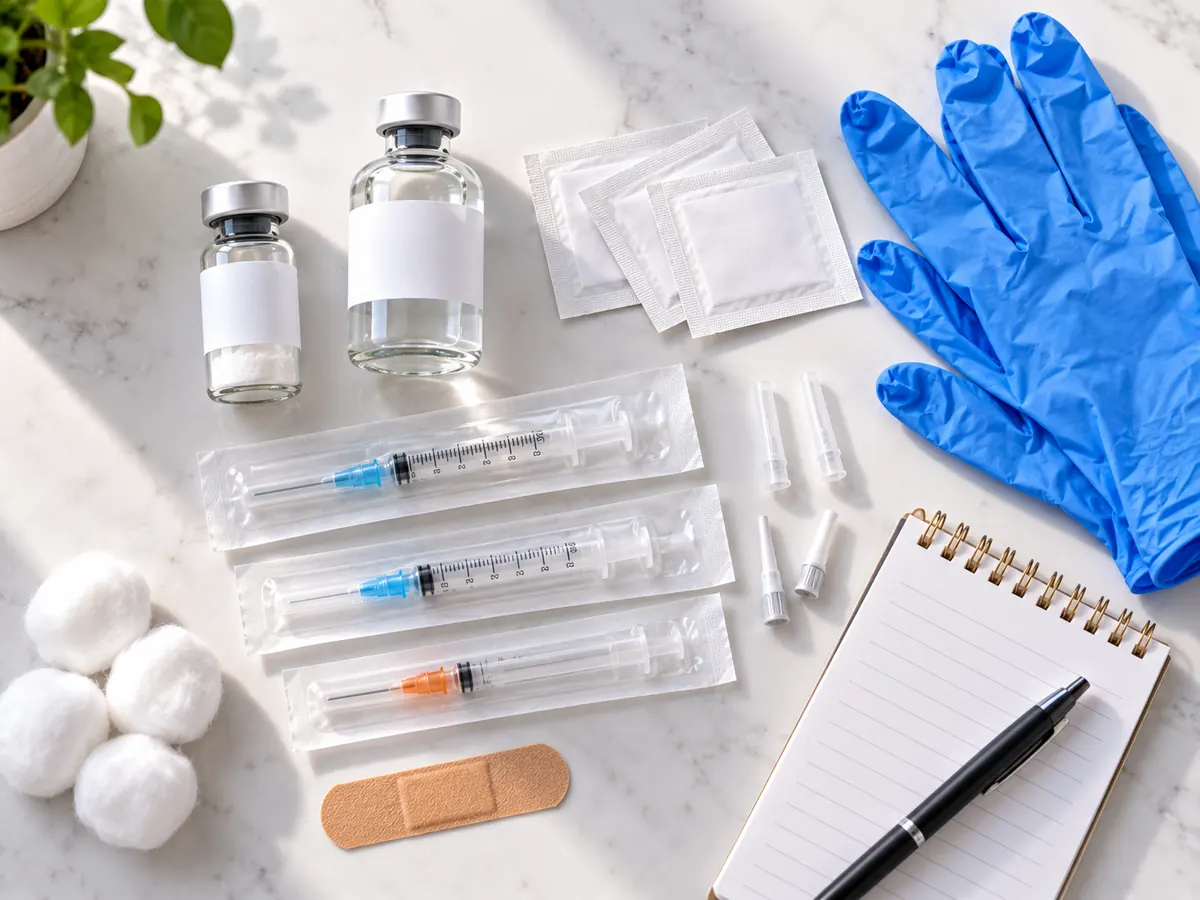
Bacteriostatic water, insulin syringes, alcohol swabs and a sharps container for anything injected.
Bloodwork
Baseline and follow-up labs. A basic panel can cost under $100 or several hundred without insurance. See our bloodwork guide.
Wasted product
Once mixed, many peptides keep up to 28 days in the fridge. Buying more than you can use in that window wastes money.
Shipping
Cold-chain shipping, minimum orders and taxes can add up, especially for small orders.
Testing
Some buyers pay an independent lab to test research products, which adds cost per sample.
Visits
Clinician consults and follow-ups, if they are not already in the price.
How to spend less, safely
- Check insurance first for FDA-approved drugs, then compare manufacturer self-pay prices. See how to get peptides legally.
- Use an HSA or FSA for eligible prescribed medications and lab work.
- Buy only what you will use. The peptide calculator shows how long a vial lasts at a given amount.
- Pay for proof, not just product. A recent third-party COA is worth more than a lower price.
- Track results so you stop paying for anything that is not helping. Lab Analysis shows your markers over time.
See what people actually pay
The Peptide Price Index shows member-reported prices as a median price per mg for BPC-157, GHK-Cu, tirzepatide and more. Add what you paid to make it more accurate.
Frequently asked questions
How much do peptides cost?
It depends on the type. As of October 2026, FDA-approved GLP-1 peptides like Wegovy and Zepbound cost about $149 to $449 a month with manufacturer self-pay programs. Compounded GLP-1s from telehealth companies often run about $150 to $300 a month. Clinic peptide programs often cost $250 to $800 a month with consults and labs. Research peptide vials often list for $25 to $90 each, plus supplies.
How much do peptides cost per month?
Most people spend somewhere between $100 and $800 a month. The low end is a single research peptide bought online, which carries the most quality risk. The high end is a supervised clinic program with consults, prescriptions and bloodwork included. Brand GLP-1 drugs through self-pay programs land in the middle at roughly $149 to $449 a month.
How much does peptide therapy cost at a clinic?
Clinic and telehealth peptide programs often charge $250 to $800 a month, depending on how many peptides are prescribed and whether labs and visits are included. Initial consultations at in-person clinics commonly run $200 to $500, and lab panels can add a few hundred dollars more.
Does insurance cover peptides?
Insurance may cover FDA-approved peptide drugs, such as semaglutide or tirzepatide, when they are prescribed for an approved condition and your plan includes them. Compounded peptides and research peptides are generally not covered. If you have a prescription, an HSA or FSA can often be used for eligible costs.
Why are research peptides so much cheaper?
Research peptides skip clinical trials, FDA review, pharmacy oversight and medical visits, so the price only reflects making and shipping the powder. That is also why quality varies: independent testing has found vials that were underdosed, overdosed or contained the wrong compound.
What is the cheapest way to get semaglutide or tirzepatide legally?
With a prescription, the manufacturer self-pay programs are the main legal route without insurance. As of October 2026, Wegovy pens start at $199 for the first two fills of the lowest doses, then $349, and Zepbound vials range from $299 to $449 a month. Prices and offers change, so check NovoCare and LillyDirect before ordering.
What other costs come with peptides?
Plan for bacteriostatic water, insulin syringes, alcohol swabs and a sharps container if a peptide is injected, plus shipping and refrigeration. Many people also pay for baseline and follow-up bloodwork, clinician visits, and independent lab testing of research products.
Are cheap peptides worth it?
A low price can cost more in the end if the vial is underdosed, contaminated or mislabeled. Before comparing prices, compare oversight: FDA-approved and pharmacy-compounded products are made under regulation, while research peptides are not. Ask any seller for a recent third-party certificate of analysis.
Get more from every dollar
Build an educational protocol around your goal, then track your bloodwork so you know what is actually working. Free.
Sources
- Novo Nordisk. Save on Wegovy: self-pay prices. wegovy.com (checked October 29, 2026)
- Eli Lilly. LillyDirect: Zepbound self-pay vials. lilly.com (checked October 29, 2026)
- U.S. Food and Drug Administration. FDA's Concerns with Unapproved GLP-1 Drugs Used for Weight Loss. fda.gov
- Mendias CL, Awan TM. Evaluation of Research Grade Peptides Marketed Directly to Consumers. Preprints.org, 2026 (not peer reviewed). DOI
This content is for informational purposes only and is not medical or financial advice. Many peptides discussed here are research compounds not approved by the FDA for human use. Prices are estimates that change often. Always consult a qualified healthcare provider before starting any peptide.