Are Peptides Safe?
It depends on which peptide, where it comes from and how it is used. Here is what the research and the FDA actually say.
- Approved peptide drugs: strong safety data
- Most research peptides: little human data
- Product quality varies widely

Educational content only, not medical advice. Nothing on this page is a dosing recommendation. Talk to a licensed clinician before using any peptide.
The short answer
Some peptides are well studied and reasonably safe under medical supervision. Many popular ones are not. FDA-approved peptide drugs such as semaglutide and tirzepatide went through large clinical trials, so their side effects are well documented. Research peptides such as BPC-157 and TB-500 have mostly animal and lab data, and the product in the vial is not checked by any regulator.
So the honest question is not "are peptides safe?" but "how much do we know about this peptide, and how sure am I about what is in this vial?" The three tiers below are the fastest way to answer that.
Three tiers of peptide safety
Same word, very different levels of evidence and oversight.
FDA-approved drugs
Semaglutide, tirzepatide, tesamorelin, insulin. Tested in thousands of people, made under CGMP, side effects on the label.
Evidence: strong
Compounded by prescription
Made by a licensed pharmacy for one patient. Not FDA-approved or reviewed, but the pharmacy is regulated and a clinician is involved.
Evidence: depends on the drug
Research chemicals
Sold "for research use only." No FDA oversight of identity, purity, sterility or dose. Most human safety data is missing.
Evidence: mostly preclinical
For the full breakdown, see FDA-approved peptides vs research peptides and what "research use only" means.
What the evidence shows
The gap between approved drugs and research peptides is huge.
Average weight loss was 14.9% with semaglutide vs 2.4% with placebo. Stomach side effects such as nausea and diarrhea were the most common. They were usually mild to moderate and faded over time, and 4.5% stopped because of them vs 0.8% on placebo.
Wilding et al., NEJM 2021 (PMID 33567185)
A 2025 review of BPC-157 in orthopaedic sports medicine found only one clinical study and no clinical safety data. Animal results look promising for tendon and muscle healing, but short- and long-term safety in people has not been established.
Vasireddi et al., HSS Journal 2025 (PMID 40756949)
The same pattern holds for most research peptides, including TB-500, MOTS-c, KPV and Semax: interesting early research, very little human safety data.
The bigger risk: what is in the vial
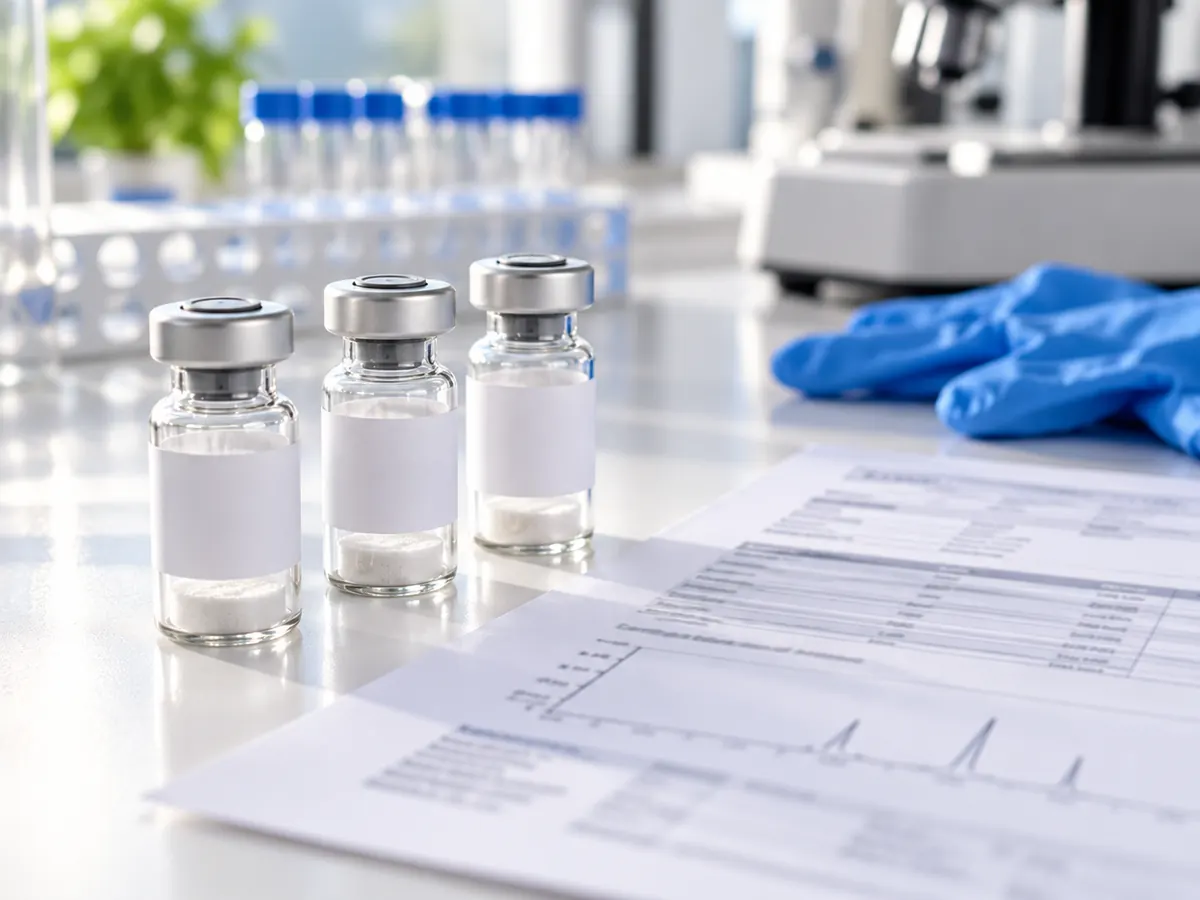
With research peptides, the product itself is often a bigger unknown than the molecule. A 2026 preprint analyzed 6,285 voluntarily submitted test results covering 203 vendors.
- Purity was usually high (median 99.8%), but the amount in the vial often did not match the label.
- 41.6% missed a compounding-style quality standard, and 71.1% missed a stricter manufacturing-style standard.
- Some vials held the wrong compound: about 10% of TB-500 and 9.1% of CJC-1295 samples (with and without DAC combined) failed identity testing.
- Of 243 samples tested for endotoxin, 15% had measurable levels. Endotoxin can cause fever and inflammation when injected.
This is a preprint that has not been peer reviewed, and the samples were self-selected, so treat the exact numbers with care (Mendias & Awan, 2026). Learn how to check a test report in our guide to reading a peptide COA.
Common side effects by peptide type
What people most often report, based on trials and the available research.
Any injection
Redness, itching, swelling or bruising at the site. Poor sterile technique raises the risk of infection.
GLP-1 drugs
Nausea, diarrhea, vomiting and constipation, most often when starting or raising a dose. Rare but serious risks such as pancreatitis are on the label. Compare them in semaglutide vs tirzepatide.
GH secretagogues
Increased hunger, water retention, tingling and higher blood sugar. Some older compounds can raise cortisol and prolactin. See CJC-1295 (usually the no-DAC form) and ipamorelin, and how they differ from steroids in are peptides steroids?
Healing peptides
BPC-157 and TB-500 users mostly report mild injection-site reactions, but without human trials, rarer or long-term effects are simply unknown.
Nasal peptides
Semax and similar sprays can cause nasal irritation. Human data comes mostly from Russia and is limited.
Full side effect guide
Compound-by-compound side effects, warning signs and when to stop.
Where regulators stand in 2026
- FDA concerns (2023). The FDA placed several peptides in its "significant safety risks" category, citing impurity and characterization concerns for BPC-157, possible immune reactions for MOTS-c and a lack of human data for KPV.
- Advisory committee (July 2026). The FDA's Pharmacy Compounding Advisory Committee reviewed several of these peptides at its July 23-24 meeting.
- HHS policy (October 2026). HHS announced draft enforcement discretion letting licensed 503A pharmacies compound six peptides by prescription: BPC-157, TB-500, Epitalon, Semax, KPV and MOTS-c. Strict rules apply: an FDA-registered CGMP ingredient source, full testing and adverse event reporting. This is not FDA approval, and it does not cover research chemical sellers.
- Compounded GLP-1s. Through May 31, 2026, the FDA received 990 adverse event reports for compounded semaglutide and more than 730 for compounded tirzepatide, including hospitalizations from dosing errors (FDA).
- Sport. WADA bans BPC-157 (class S0) and growth hormone secretagogues (class S2) for tested athletes.
Track each compound in our FDA peptide status tracker, and see are peptides legal in 2026 and what a compounded peptide is.
How to lower the risk
If you and your clinician decide a peptide is worth trying, these habits remove a lot of avoidable risk.
- Work with a clinician and choose approved or prescribed products when they exist. See what each option costs.
- Demand a real COA that tests identity, purity, amount and endotoxin, from an independent lab. Here is how to read one.
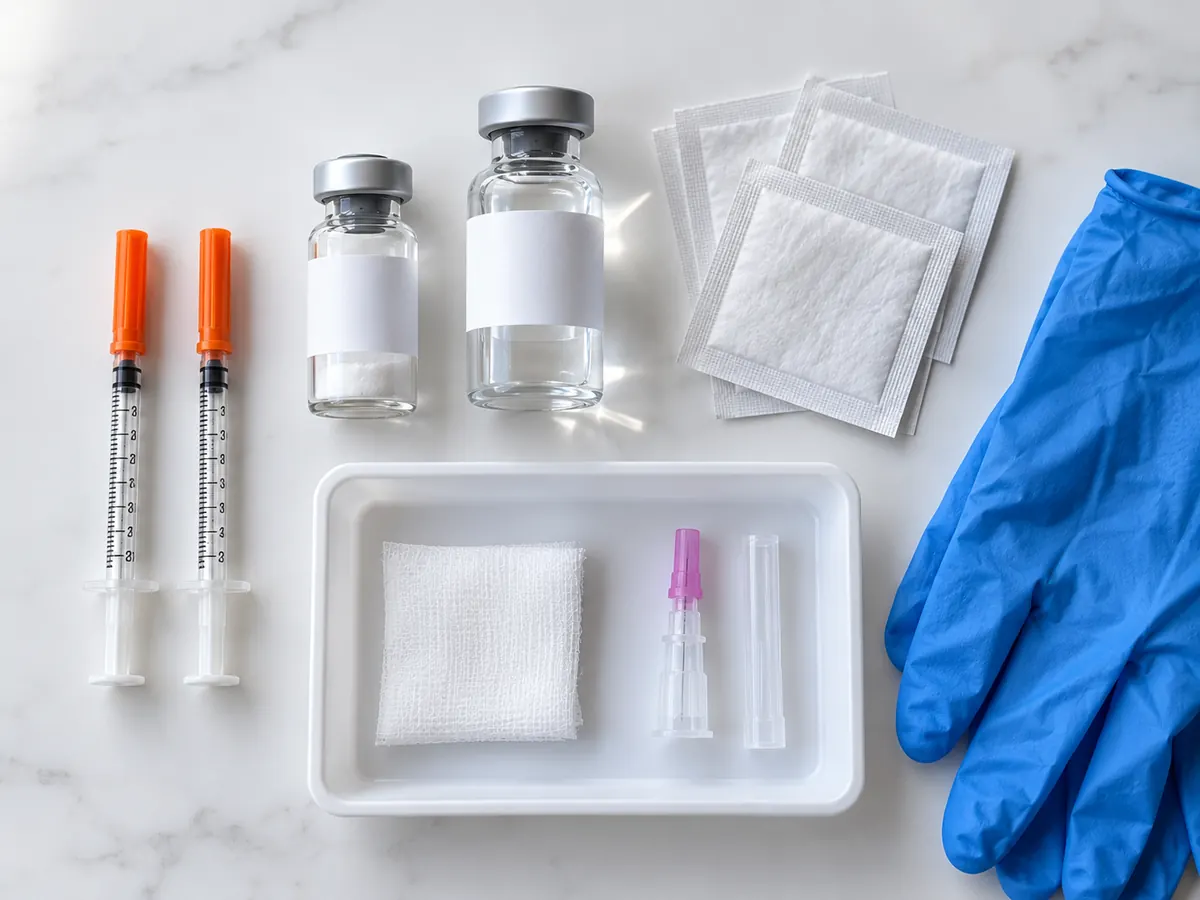
- Use sterile technique: bacteriostatic water, new syringes, alcohol swabs and a sharps container.
- Double-check the math on reconstitution and syringe units with a peptide calculator. Dosing errors are a top cause of compounded GLP-1 harm.
- Get baseline bloodwork and recheck it. Our peptide bloodwork guide covers what to test.
Who should take extra care
- Anyone pregnant, trying to conceive or breastfeeding.
- Anyone under 18.
- People with a personal or family history of cancer, especially with growth-promoting peptides.
- People on other medications, including diabetes and blood pressure drugs.
- Athletes who are drug tested.
Already using peptides? Upload your results to Lab Analysis to see how your markers are trending, then bring that to your clinician.

Frequently asked questions
Are peptides safe?
It depends on which peptide, where it comes from and how it is used. FDA-approved peptide drugs such as semaglutide have large clinical trials behind them and well-documented side effects. Most research peptides, such as BPC-157 and TB-500, have little or no human safety data, and product quality varies a lot between sellers.
Are peptides steroids?
No. Anabolic steroids are synthetic versions of testosterone with a ring-shaped chemical structure. Peptides are short chains of amino acids that act on specific receptors. Some peptides are still banned in sport: WADA prohibits BPC-157 and growth hormone secretagogues such as ipamorelin and CJC-1295.
What are the most common side effects of peptides?
Injection-site redness, itching, swelling or bruising are the most common, and they apply to any injection. GLP-1 drugs like semaglutide most often cause nausea, diarrhea and other stomach effects. Growth hormone secretagogues can increase hunger and, with some older compounds, raise cortisol and prolactin.
Is BPC-157 safe for humans?
Nobody knows yet. A 2025 systematic review found 36 studies on BPC-157, of which 35 were preclinical and only 1 was a small clinical report, with no clinical safety data. That means its short-term and long-term safety in people has not been established.
Are research peptides safe to inject?
They carry extra risk because they are not made or checked under FDA oversight. A 2026 analysis of more than 6,000 voluntarily tested samples found that about 4 in 10 missed a compounding-style quality standard, mostly because the amount in the vial did not match the label, and some samples did not contain the stated peptide at all.
Did the FDA approve BPC-157 in 2026?
No. In October 2026, HHS announced a draft enforcement discretion policy that lets licensed 503A pharmacies compound six peptides, including BPC-157 and TB-500, by prescription under strict sourcing and testing conditions. That is not FDA approval, and the peptides are not yet on the 503A Bulks List.
Are compounded GLP-1 drugs safe?
Compounded versions are not FDA-approved, so the FDA does not review their safety, effectiveness or quality. By May 31, 2026, the FDA had received 990 adverse event reports for compounded semaglutide and more than 730 for compounded tirzepatide, including some hospitalizations linked to dosing errors.
Who should avoid peptides?
Talk to a doctor before using any peptide, and take extra care if you are pregnant or breastfeeding, under 18, have a history of cancer, take other medications, or compete in tested sports. Growth-promoting peptides raise theoretical concerns for anyone with a cancer history.
How can I lower the risk of using peptides?
Choose FDA-approved or properly prescribed products when they exist, work with a clinician, ask for a certificate of analysis that tests identity, purity and endotoxin, use sterile technique, and track how you feel and your bloodwork over time.
Make safer decisions with your data
Build an educational protocol that flags interactions and cautions, then track how your body responds. Free.
Sources
- Wilding JPH, et al. Once-Weekly Semaglutide in Adults with Overweight or Obesity. N Engl J Med. 2021. PMID 33567185
- Vasireddi N, et al. Emerging Use of BPC-157 in Orthopaedic Sports Medicine: A Systematic Review. HSS J. 2025. PMID 40756949
- Mendias CL, Awan TM. Evaluation of Research Grade Peptides Marketed Directly to Consumers. Preprints.org, 2026 (not peer reviewed). DOI
- U.S. Food and Drug Administration. FDA's Concerns with Unapproved GLP-1 Drugs Used for Weight Loss. fda.gov
- National Community Pharmacists Association. FDA grants enforcement discretion for compounding of six peptides. October 29, 2026. ncpa.org
This content is for informational purposes only and is not medical advice. Many peptides discussed here are research compounds not approved by the FDA for the uses described. Always consult a qualified healthcare provider before starting any new peptide, supplement, or hormone protocol.